AI, hybrid work to reshape offices by 2050: IWG
Neural implants, VR meeting rooms, and flexible work models are expected to redefine the workplace.
AI, neurotechnology, and hybrid work are expected to transform the workplace by 2050, with long commutes and traditional 9-to-5 schedules likely to disappear, according to a study by International Workplace Group (IWG).
The study found that neural implants, which create a direct link between the human brain and external devices, are the top emerging technology expected in future workplaces. This was cited by 33% of HR leaders and 26% of employees.
Workplace technology is also expected to look vastly different by 2050, according to 68% of HR leaders and 72% of employees.
AI and automation are projected to reshape most office-based roles, with 71% of HR leaders and 73% of employees expecting these tools to change how work is done.
The pace of work is also expected to accelerate, according to 74% of employees and 70% of HR leaders.
In Singapore, AI adoption is already delivering workplace gains. Among firms that have adopted AI, 70% reported improved employee productivity, whilst 13% reported improved decision-making and 11% reported greater innovation, according to data cited in the IWG report.
The study also found that nearly seven in 10 HR leaders and employees expect long daily commutes and the traditional 9-to-5 workday to disappear by 2050.
Instead, work is expected to take place across multiple locations, with 70% of HR leaders and 75% of employees predicting this shift.
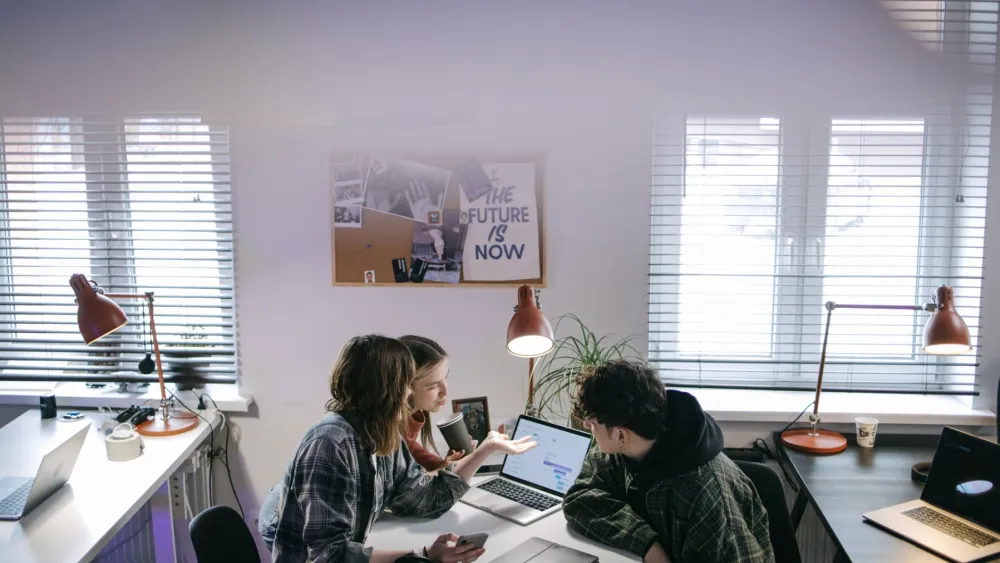
Hybrid work is also expected to become the standard model, according to 78% of HR leaders and 64% of employees.
Meanwhile, 66% of employees and 63% of HR leaders believe strict return-to-office mandates will disappear as organisations place greater emphasis on flexibility and autonomy.
Virtual and augmented reality are also expected to play a larger role in workplace collaboration. Around 70% of HR leaders and 69% of employees believe these technologies will replace many traditional office interactions, including in-person meetings.
Future workplaces are also expected to become more human-centred, with respondents citing family-friendly spaces, multi-purpose environments, and office designs that incorporate natural elements, such as living walls, indoor gardens, and natural light zones.
Flexibility will be key to attracting and retaining talent, with 75% of both HR leaders and employees saying it will be critical for organisations by 2050.
The study was conducted by Censuswide from 3 to 11 March 2026, covering 2,002 HR leaders and employees aged 18 and above across the UK and the US.





















 Read Here
 Advertise
 Sign Up